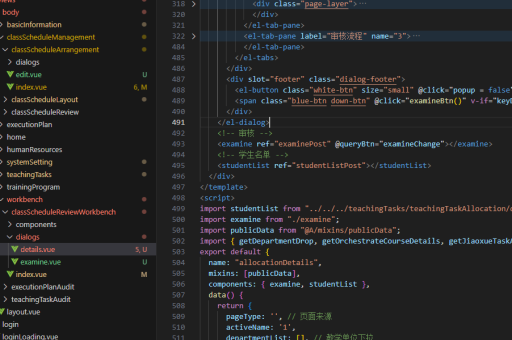
vue如何实现继承
Vue 组件继承的实现方式
Vue 本身没有传统面向对象编程中的“类继承”概念,但可以通过以下方式模拟组件间的逻辑复用和继承关系:
使用混入 (Mixins)
混入是 Vue 提供的一种代码复用机制,允许将组件选项合并到多个组件中。

// 基础混入对象
const baseMixin = {
  data() {
    return {
      baseData: 'Base data'
    }
  },
  methods: {
    baseMethod() {
      console.log('Base method called')
    }
  }
}

// 子组件
Vue.component('child-component', {
  mixins: [baseMixin],
  data() {
    return {
      childData: 'Child data'
    }
  },
  methods: {
    childMethod() {
      this.baseMethod()
    }
  }
})
使用 extends 选项
Vue 提供了 extends 选项,允许一个组件扩展另一个组件。
// 基础组件
const BaseComponent = {
  template: '<div>Base: {{baseData}}</div>',
  data() {
    return {
      baseData: 'Base data'
    }
  }
}

// 扩展组件
const ExtendedComponent = {
  extends: BaseComponent,
  template: '<div>Extended: {{baseData}}, {{extendedData}}</div>',
  data() {
    return {
      extendedData: 'Extended data'
    }
  }
}
使用高阶组件 (HOC)
通过函数式编程的方式创建包装组件。

function withBaseComponent(WrappedComponent) {
  return {
    data() {
      return {
        baseData: 'Base data'
      }
    },
    render(h) {
      return h(WrappedComponent, {
        props: {
          baseData: this.baseData
        }
      })
    }
  }
}

const MyComponent = {
  props: ['baseData'],
  template: '<div>Component with base: {{baseData}}</div>'
}

const EnhancedComponent = withBaseComponent(MyComponent)
使用 Composition API
Vue 3 的 Composition API 提供了更灵活的代码组织方式。
// 基础逻辑
function useBase() {
  const baseData = ref('Base data')
  const baseMethod = () => {
    console.log('Base method called')
  }
  return { baseData, baseMethod }
}

// 子组件
export default {
  setup() {
    const { baseData, baseMethod } = useBase()
    const childData = ref('Child data')

    return {
      baseData,
      baseMethod,
      childData
    }
  }
}
使用 Provide/Inject
适合深层嵌套组件间的“继承”关系。
// 祖先组件
export default {
  provide() {
    return {
      baseData: 'Base data',
      baseMethod: () => {
        console.log('Base method called')
      }
    }
  }
}

// 后代组件
export default {
  inject: ['baseData', 'baseMethod'],
  created() {
    this.baseMethod()
  }
}
选择建议
- 简单逻辑复用优先使用混入或 extends
- 复杂场景考虑 Composition API
- 深层组件通信使用 Provide/Inject
- 需要最大灵活性时使用高阶组件
每种方式都有其适用场景,应根据具体需求选择最合适的实现方案。