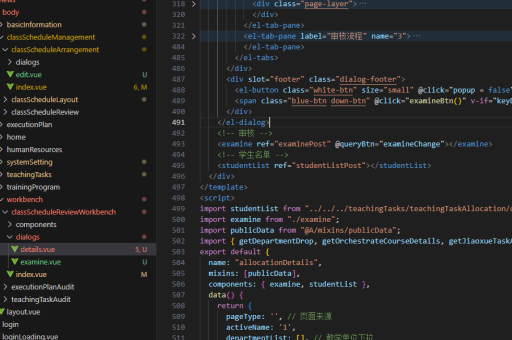
vue如何实现新增功能
Vue 实现新增功能的方法
在 Vue 中实现新增功能通常涉及表单绑定、事件处理和状态管理。以下是几种常见的实现方式:
使用 v-model 绑定表单数据
通过 v-model 实现表单数据的双向绑定,可以轻松获取用户输入的数据。例如:
<template>
  <input v-model="newItem" placeholder="输入新增内容">
  <button @click="addItem">新增</button>
</template>

<script>
export default {
  data() {
    return {
      newItem: '',
      items: []
    }
  },
  methods: {
    addItem() {
      if (this.newItem.trim()) {
        this.items.push(this.newItem)
        this.newItem = ''
      }
    }
  }
}
</script>
使用 Vuex 管理状态
对于大型应用,可以通过 Vuex 集中管理状态。新增功能通过提交 mutation 或分发 action 来实现:
// store.js
const store = new Vuex.Store({
  state: {
    items: []
  },
  mutations: {
    ADD_ITEM(state, item) {
      state.items.push(item)
    }
  },
  actions: {
    addItem({ commit }, item) {
      commit('ADD_ITEM', item)
    }
  }
})

// 组件中调用
this.$store.dispatch('addItem', this.newItem)
表单验证
在新增数据前进行验证,确保数据的有效性:
methods: {
  addItem() {
    if (!this.newItem) {
      alert('请输入内容')
      return
    }
    this.items.push(this.newItem)
    this.newItem = ''
  }
}
与后端交互

通过 axios 等库将新增数据发送到后端:
methods: {
  async addItem() {
    try {
      const response = await axios.post('/api/items', {
        item: this.newItem
      })
      this.items.push(response.data)
      this.newItem = ''
    } catch (error) {
      console.error('新增失败', error)
    }
  }
}
使用计算属性
通过计算属性处理新增数据的格式或验证:
computed: {
  isValidItem() {
    return this.newItem.trim().length > 0
  }
}
根据具体需求选择合适的方法,确保新增功能符合业务逻辑和用户体验要求。