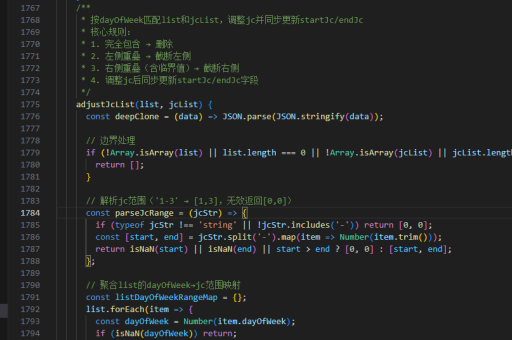
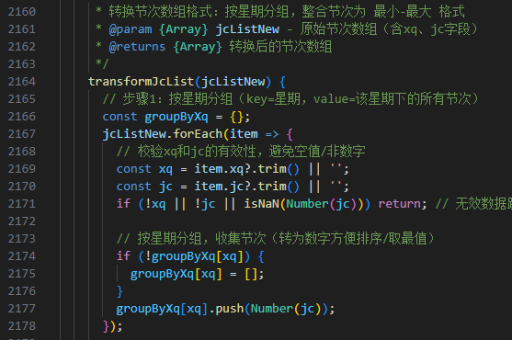
js实现步骤
实现步骤的基本方法
在JavaScript中实现步骤通常涉及条件判断、循环、函数调用等基本编程结构。以下是几种常见的方法:
条件判断实现步骤
使用if-else或switch语句根据条件执行不同的步骤:
function executeStep(step) {
  if (step === 1) {
    console.log("执行第一步操作");
  } else if (step === 2) {
    console.log("执行第二步操作");
  } else {
    console.log("无效步骤");
  }
}
状态机模式
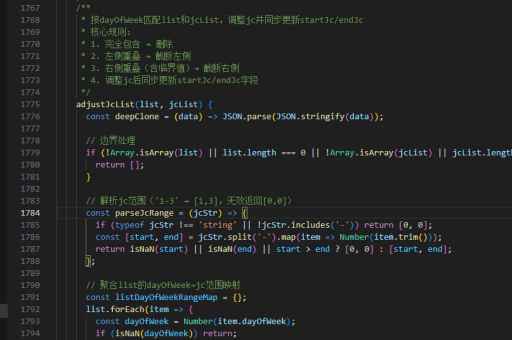
对于复杂的多步骤流程,可以使用状态机模式:
const steps = {
  step1: () => console.log("步骤1完成"),
  step2: () => console.log("步骤2完成"),
  step3: () => console.log("步骤3完成")
};

function executeWorkflow(currentStep) {
  steps[currentStep]();
}
异步步骤控制
对于需要等待异步操作完成的步骤流程,可以使用Promise链或async/await:
Promise链实现
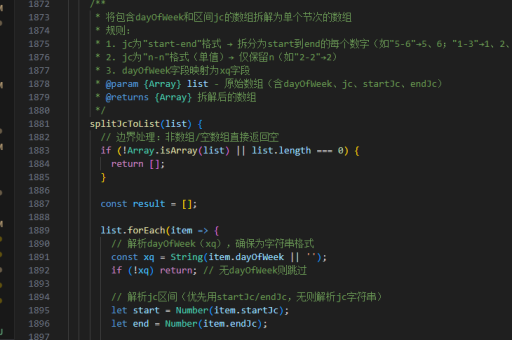
function step1() {
  return new Promise(resolve => {
    setTimeout(() => {
      console.log("步骤1完成");
      resolve();
    }, 1000);
  });
}

function step2() {
  return new Promise(resolve => {
    setTimeout(() => {
      console.log("步骤2完成");
      resolve();
    }, 1000);
  });
}

step1().then(step2);
async/await实现
async function executeSteps() {
  await step1();
  await step2();
  console.log("所有步骤完成");
}
步骤队列管理
对于需要动态管理的步骤队列,可以使用数组存储步骤函数:
const stepQueue = [
  () => console.log("步骤1"),
  () => console.log("步骤2"),
  () => console.log("步骤3")
];

function runNextStep() {
  const nextStep = stepQueue.shift();
  if (nextStep) nextStep();
}

// 执行所有步骤
while(stepQueue.length > 0) {
  runNextStep();
}
可配置的步骤处理器
创建一个可配置的步骤处理器,支持错误处理和步骤回退:
class StepProcessor {
  constructor(steps) {
    this.steps = steps;
    this.currentStep = 0;
  }

  async start() {
    while(this.currentStep < this.steps.length) {
      try {
        await this.steps[this.currentStep]();
        this.currentStep++;
      } catch (error) {
        console.error(`步骤${this.currentStep+1}失败:`, error);
        break;
      }
    }
  }
}

const processor = new StepProcessor([
  () => new Promise(resolve => setTimeout(() => {
    console.log("步骤1完成");
    resolve();
  }, 1000)),
  () => new Promise((_, reject) => setTimeout(() => {
    reject("步骤2出错");
  }, 1000))
]);

processor.start();